There is a specific kind of joke that only works inside one group of people. The phrase your team has repeated since March. The thing your manager always mishears. The nickname that stuck to a project and outlived it.
You cannot buy that shirt, because nobody sells it. You have to make it. The good news is that making one shirt, with your own words, is now genuinely easy and genuinely cheap, which was not true five years ago.
This is a practical guide to getting it right: how printing one shirt actually works, how to write a slogan that lands, and the mistakes that turn a good line into a shirt nobody wears.
The short answer: write your line in the HollaBoo slogan studio, choose the shirt colour and where the text sits, and order exactly one. There is no minimum, and you see the design on the shirt before you pay for it.
Can You Really Order Just One Custom T-Shirt?
Yes, and this is the part most people still do not realise. The old model required screens, setup fees and a minimum order of twenty, which is why custom shirts used to mean sports teams and bachelor parties.
Print on demand removed that. The defining feature of the model is the ability to make products to order with no minimum, fulfilling a single item with a specific design. Nothing is printed until somebody buys it, so one shirt costs what one shirt should cost.
The category has grown accordingly. Print on demand is expected to pass $11 billion in 2026, apparel is the largest slice of it at around 39% of revenue, and custom t-shirts lead apparel. Roughly 36% of shoppers now expect personalization as a default, and 48% will happily wait longer to get it.
How Does Printing a Custom T-Shirt Work?
Modern one-off printing is usually direct to garment, which works like an inkjet printer aimed at fabric. The ink soaks into the cotton rather than sitting on top of it as a plastic layer, which is why a good DTG print feels like part of the shirt and survives washing without cracking.
Three practical consequences worth knowing before you design anything:
Cotton prints best. Ink bonds with natural fibres, so 100% cotton gives the sharpest result. Heather colours contain polyester and print slightly softer.
Shirt colour changes the ink. On dark shirts a white underbase is printed first so colours stay bright. Light text on dark fabric is the most reliable combination.
It is made after you order. Nothing sits in a warehouse. That means a few extra days, and it means your design exists nowhere else in the world.
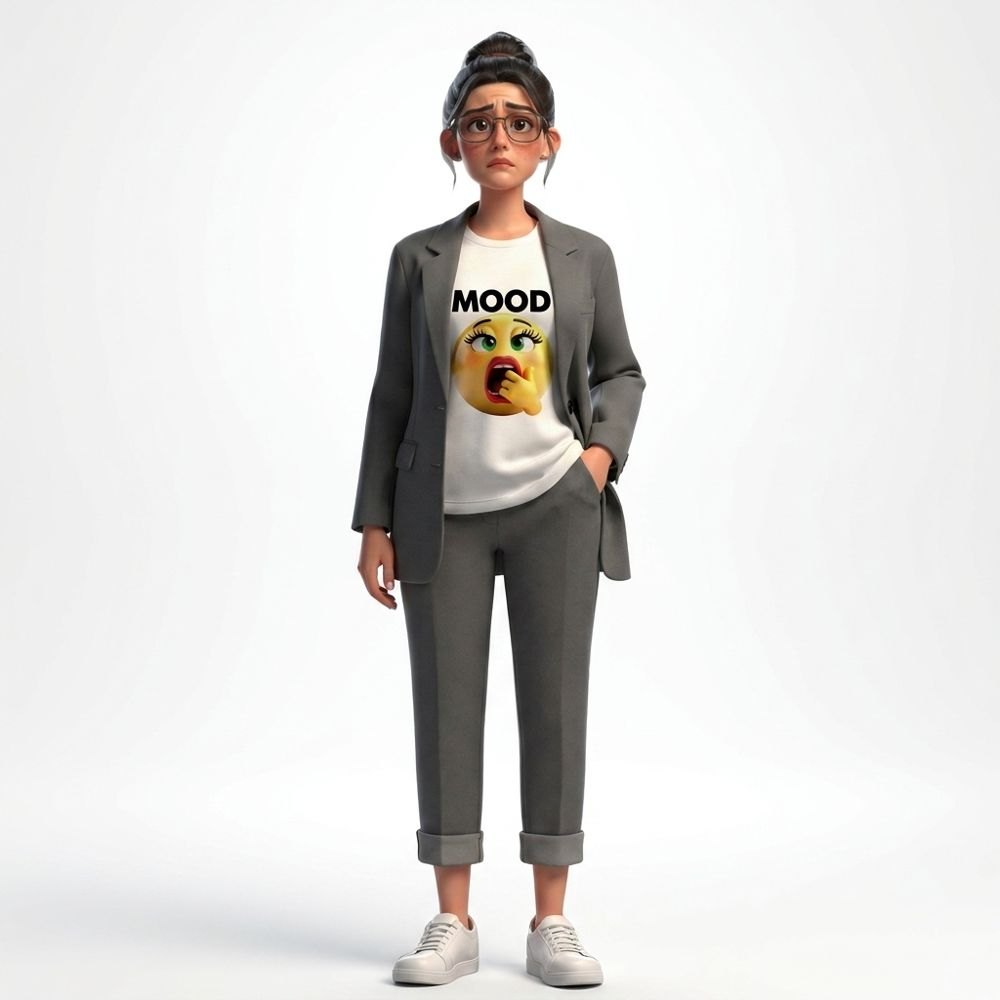
How Do You Write a Slogan That Actually Works on a Shirt?
Most custom shirts fail at the writing stage, not the printing stage. A line that is funny in a group chat can die on cotton, because a shirt is read by strangers, in four seconds, with no context.
Keep it under seven words
A shirt is a headline, not a paragraph. Anything longer has to shrink to fit, and small text on a chest is a shirt nobody can read without staring, which is an uncomfortable thing to make people do.
Be specific, not general
"I hate Mondays" is a joke about everyone, which means it is a joke about nobody. "Third standup today" is specific enough that someone will laugh out loud, because it happened to them this morning.
Say it out loud before you print it
If it needs explaining, it is not a shirt, it is an anecdote. The test is whether someone can read it, understand it, and react without asking a question.
Check it in front of the worst possible reader
Imagine your line read by a stranger with no context, and by your most literal colleague. If either interpretation is awkward, rewrite it. The best workplace slogans are about shared situations, never about a particular person.
Weak slogan | Why the stronger version works |
|---|---|
"Work is hard" | True of everyone, so it says nothing about the wearer |
"I survived the Q3 migration" | Specific, dated, and earns a story every time it is worn |
"Sorry I'm late, I had a meeting about a meeting" | Too long to read at a glance; cut to five words |
"Ask me about the incident" | Invites the conversation instead of explaining it |
What Should You Choose: Shirt Colour, Placement and Size?
Colour
Black and white do most of the work. Black hides everything and makes light text pop; white is the safest background for anything colourful. Heather greys look good in photographs and are more forgiving day to day than either.
Placement
Centre chest is the default for a reason: it reads cleanly and photographs well. A small print over the heart is quieter and works better for a phrase meant for people who already know. Front and back is for slogans with a punchline that benefits from a delay.
Size
Buy for the fit the person already wears, and when unsure go one size up on a unisex cut. Oversized reads as a deliberate style; too tight reads as a mistake and gets worn once.
What Makes a Good Custom Shirt Gift?
A custom shirt is the strongest gift in the office category, because it is the only one that cannot be bought by anyone else. It works especially well for farewells, promotions, and long-running team jokes, where a generic present would feel like a formality.
Two rules keep it on the right side of the line. Make the joke about the shared situation rather than the person, and make sure they could wear it in front of leadership without wincing. Our guide to funny gifts for coworkers goes deeper on that boundary, including what to spend.
If you would rather not write anything yourself, the themed collections cover the recognisable office types, and the shop has designs ready to send.
How Long Does a Custom Shirt Take to Arrive?
Because it is printed after you order, plan on a few days for production plus shipping. For anything with a date attached, a birthday, a leaving do, a holiday exchange, order at least two weeks ahead, and earlier in December when every print house on earth is busy.
The wording usually takes longer than the ordering. The funniest version of a line is rarely the first one you type, so give yourself ten minutes with it rather than two.
The Verdict
A custom shirt is worth making when you have something specific to say. If your line is general, buy a design that is already sharp. If your line belongs to five people and nobody else on earth, print it, because that is precisely the shirt that gets worn until it fades.
Bottom line: one shirt, no minimum, your words. The only limit worth respecting is seven words and a joke that does not need explaining.